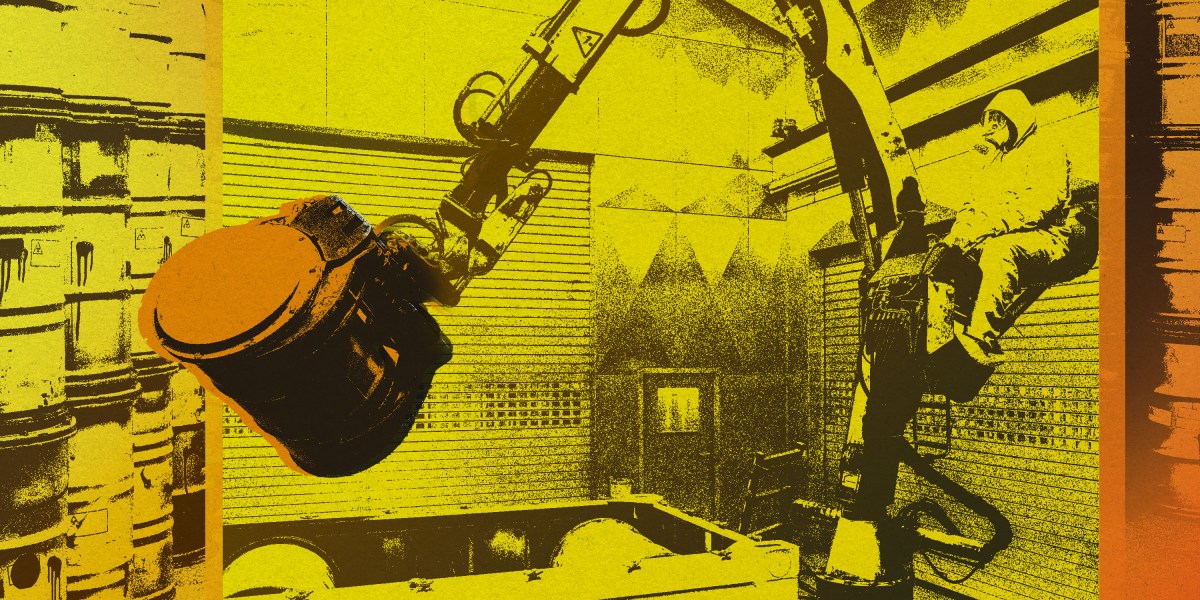

A Shifting Landscape for Spent Fuel
The world’s approach to managing nuclear waste is a complex patchwork of cooling pools, steel casings, and deep underground burial. These methods currently handle the roughly 10,000 metric tons of spent fuel generated annually by the reactors that power 10% of global electricity. However, a wave of new reactor designs on the horizon could introduce unforeseen challenges to this established waste management playbook.
Most of today’s nuclear plants operate on a similar model, using low-enriched uranium fuel cooled by water in massive, centralized facilities. But the diverse array of next-generation reactors, some expected to come online within the next few years, may necessitate adjustments to ensure existing systems can cope with their unique waste streams. “There’s no one answer about whether this panoply of new reactors and fuel types are going to make waste management any easier,” cautions Edwin Lyman, director of nuclear power safety at the Union of Concerned Scientists.
Navigating the Nuances of Nuclear Waste
Nuclear waste generally falls into two broad categories: low-level waste, such as contaminated protective gear from hospitals and research facilities, and high-level waste, which demands significantly more rigorous handling. While low-level waste, which constitutes the vast majority by volume, can often be stored on-site and eventually treated much like conventional trash after its radioactivity diminishes, high-level waste is intensely radioactive and generates considerable heat.
This more hazardous category primarily comprises spent fuel, a mixture including uranium-235—the essential component for sustaining nuclear chain reactions—along with radioactive by-products from the atom-splitting process. The prevailing expert consensus points to geologic repositories—deep, meticulously managed underground facilities—as the optimal long-term solution for high-level waste. Finland is leading the charge with such a repository, slated for operation this year, while the U.S. has faced political hurdles in advancing its own site selection.
Unusual Fuels, Unforeseen Waste
For many new reactor designs, the spent fuel management strategy will likely mirror current practices. “The way we’re going to manage spent fuel is going to be largely the same,” states Erik Cothron, manager of research and strategy at the Nuclear Innovation Alliance. However, novel fuels and coolants employed in some advanced reactors present a different scenario. “Unusual materials will create unusual waste,” explains Syed Bahauddin Alam, an assistant professor at the University of Illinois Urbana-Champaign.
Certain innovative designs could even increase the volume of material classified as high-level waste. Reactors utilizing TRISO (tri-structural isotropic) fuel, for instance, encase uranium kernels in protective layers and graphite shells. This graphite, when combined with the spent fuel, could result in a bulkier waste product. Separating these components is currently a difficult and costly endeavor, meaning the entire TRISO package would likely be treated as high-level waste. Companies like X-energy, developing high-temperature gas-cooled reactors that use TRISO fuel, are already submitting their spent fuel handling plans to the Nuclear Regulatory Commission. Interestingly, the inherent design of TRISO fuel might streamline waste management by eliminating the need for initial wet storage, allowing for direct dry storage from day one.
As these advanced reactors move closer to deployment, the industry’s ability to adapt its waste management strategies will be crucial in shaping the future of nuclear energy.
📰 Source: MIT Tech Review