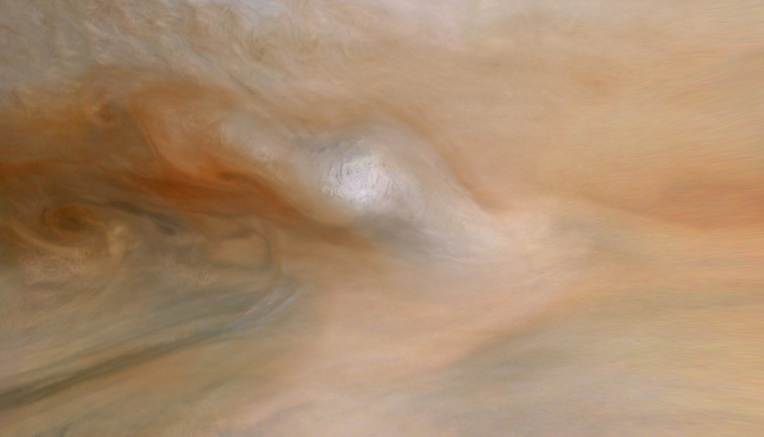

Lightning on Jupiter is no mere flicker; it’s a colossal electrical discharge, at least 100 times more powerful than anything seen on Earth, according to groundbreaking analysis of data from NASA’s Juno spacecraft. This astonishing revelation comes from scientists poring over observations made in 2021 and 2022, years after Juno was initially slated to end its mission.
A Stormy Extension
NASA’s decision to extend Juno’s operational life, a move that granted scientists valuable extra time to study the gas giant, has certainly paid off. The spacecraft, which arrived at Jupiter in 2016, has been diligently sending back data that continues to reshape our understanding of the planet’s turbulent atmosphere. The findings, published recently in the journal AGU Advances, highlight the sheer intensity of Jovian weather systems, hinting at processes far more energetic than our terrestrial storms.
Uncertain Future for a Valuable Eye
Despite Juno’s ongoing scientific bounty and its seemingly robust health, the future of this invaluable mission hangs in the balance. NASA officials have yet to give the green light for a further extension, and the reason is a familiar one: funding. Questions surrounding Juno’s fate, along with more than a dozen other robotic science missions, began to surface about a year ago when the Trump administration requested “closeout” plans for numerous spacecraft. This move followed a proposed budget that sought to drastically cut NASA’s science budget, underscoring the constant tension between ambitious exploration and budgetary realities.
As scientists continue to decipher the secrets held within Jupiter’s swirling clouds, the debate over Juno’s next chapter highlights the difficult choices facing space exploration funding, leaving the world to wonder if this crucial window into the solar system will remain open.
📰 Source: Ars Technica