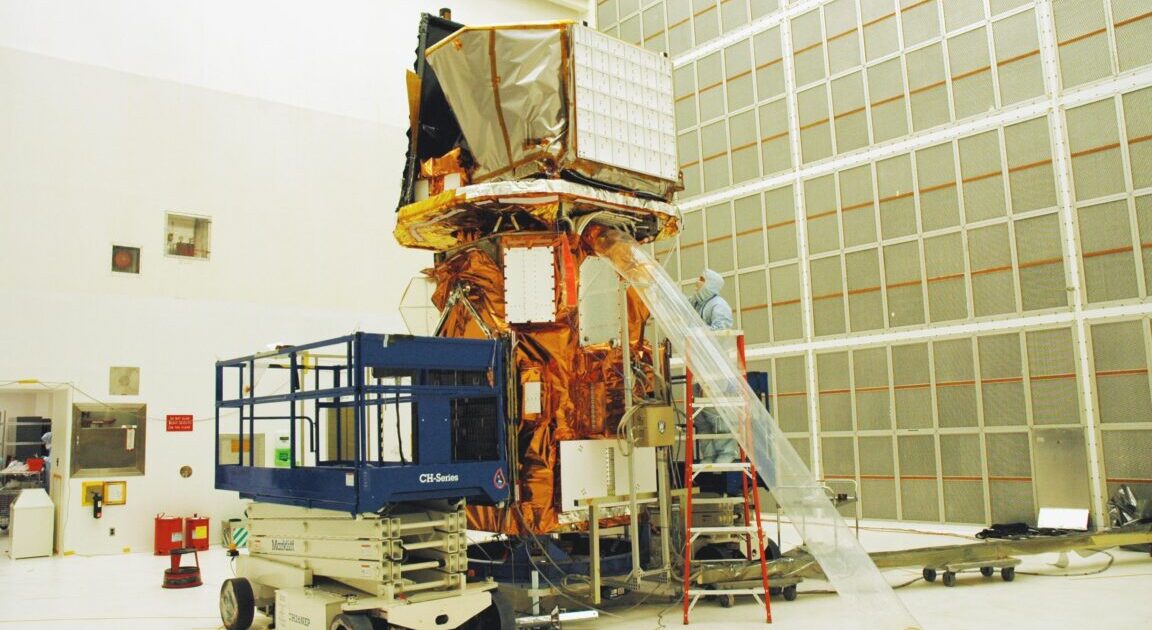
A veteran of cosmic discovery, NASA’s Neil Gehrels Swift Observatory, has been adrift in space without vital commands for over a month, sparking a race against time. The 21-year-old spacecraft, crucial for pinpointing gamma-ray bursts and other celestial fireworks, is slowly but surely descending from its orbit. Now, a groundbreaking robotic mission is being prepared in Colorado to attempt a daring aerial maneuver – a first of its kind for a privately funded operation.
A Fragile Future for a Venerable Telescope
While not as renowned as the Hubble or James Webb Space Telescopes, Swift has been a workhorse for astronomers since its 2004 launch. Its specialized instruments have provided invaluable data, helping scientists understand some of the most energetic and mysterious events in the universe. However, as Swift ages, its orbital path has become increasingly unstable. Unlike the monumental efforts undertaken to service Hubble with astronaut crews, the cost and complexity of a human-led rescue for Swift are prohibitive. This makes a commercially driven robotic intervention NASA’s most viable, and perhaps only, option to salvage the observatory’s valuable scientific output.
Pioneering a New Era of Space Salvage
The stakes are high, but the potential rewards for this pioneering effort are significant. NASA has awarded a $30 million contract to Katalyst Space Technologies, a Broomfield, Colorado-based company, to develop and launch a robotic satellite capable of rendezvousing with Swift. The plan is for this new spacecraft to gently nudge Swift back into a stable orbit, effectively extending its operational life. This initiative represents a critical step in exploring cost-effective ways to maintain aging orbital assets, a growing concern as more sophisticated and expensive satellites are deployed.
The success of this mission could pave the way for a new chapter in space exploration and maintenance, demonstrating the feasibility of private companies playing a vital role in the longevity of crucial scientific instruments. The world will be watching to see if this robotic arm can indeed extend the watchful eye of Swift across the cosmos a little while longer.